The $31 Trillion MoneyQuake Has Begun

The room was hot.
Really hot.
It was February 1946, inside the Moore School of Electrical Engineering at the University of Pennsylvania in Philadelphia.
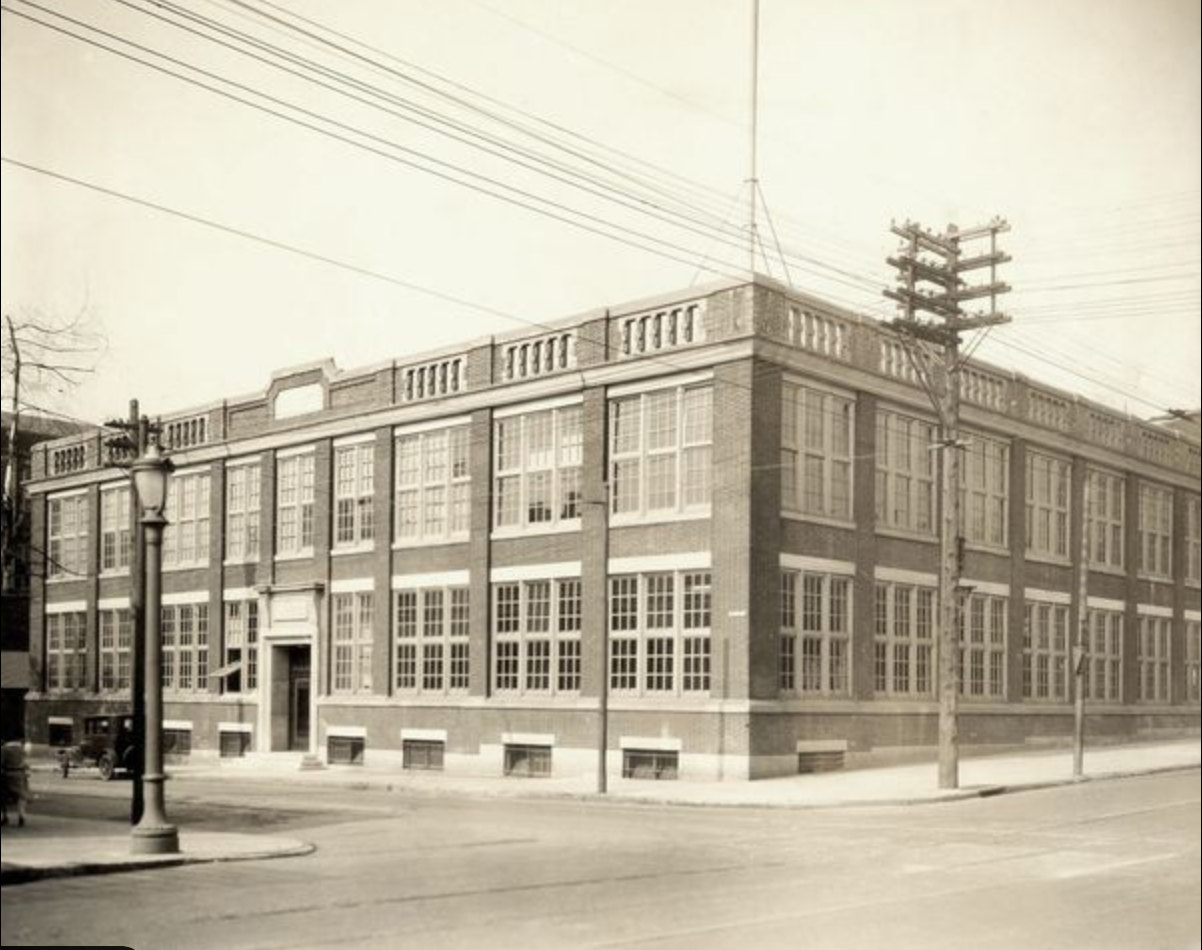
Behind closed doors sat something the world had never seen before.
It filled an entire room.
Forty enormous black metal cabinets stood arranged along the walls, packed with switches, wires, glowing tubes, and blinking lights. Thick cables snaked across the floor. Cooling fans roared continuously, fighting against the heat pouring from the machinery.
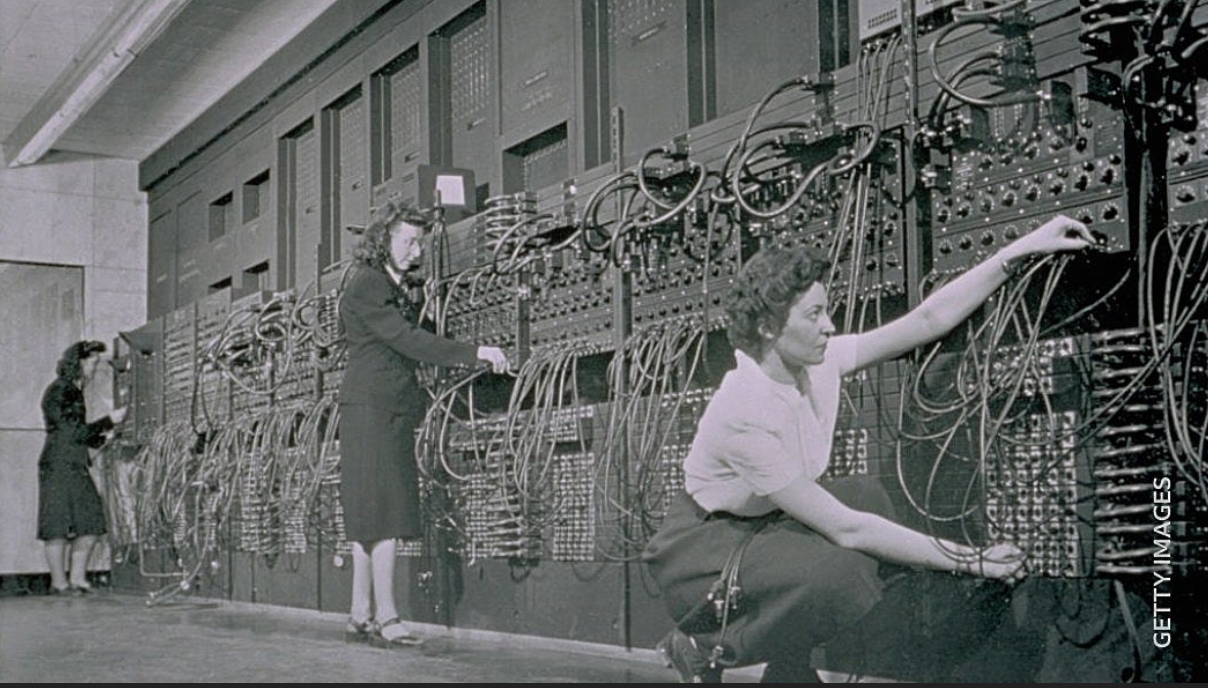
Inside those cabinets were approximately 18,000 vacuum tubes.
There were 70,000 resistors, 10,000 capacitors, 1,500 relays…
And roughly 5 million hand-soldered connections holding the whole contraption together.
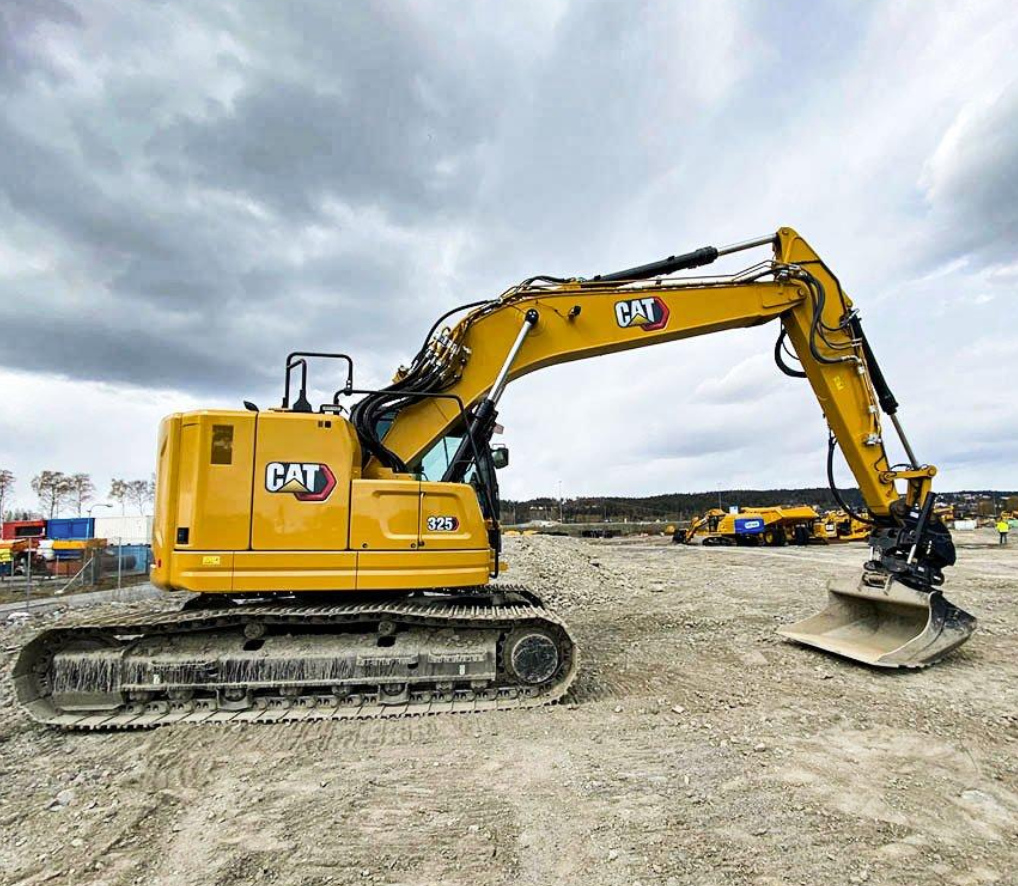
The machine weighed nearly 30 tons.
Thirty tons is the equivalent of one of these:
It occupied approximately 1,800 square feet.
And when engineers turned it on, it consumed around 150 kilowatts of electricity — enough power that legend would later claim the lights across Philadelphia dimmed whenever the machine sprang to life.
That last part probably wasn’t true.
But it certainly felt believable. Because nobody had ever built a machine quite like this.
Its name was ENIAC, the Electronic Numerical Integrator and Computer.
And in February 1946, ENIAC was formally unveiled to the public.
To understand how revolutionary this machine was, you have to forget everything you know about computing today.
There was no screen.
No keyboard and no mouse.
There was no internet, obviously, and no cloud.
And certainly no artificial intelligence.
Programming ENIAC could mean physically moving cables and manipulating switches. Teams of pioneering programmers — many of them women — had to understand the machine almost as though they were rewiring its nervous system.
Yet this lumbering 30-ton monster could perform calculations at speeds that seemed almost supernatural.
ENIAC could perform roughly 5,000 additions per second.
Today that sounds almost laughable.
The processor inside the smartphone sitting in your pocket can perform billions of operations every second.
But in 1946?
It was breathtaking.
Calculations that might have taken a human mathematician days could suddenly be completed in seconds.
The machine had originally been developed for the U.S. Army to calculate artillery firing tables during World War II. But by the time ENIAC was completed, scientists were already beginning to understand that they had created something far more consequential than a faster calculator.
They had built a machine capable of manipulating information electronically at unprecedented speed.
And that changed everything. Modern computing history was being fertilized and born.
But there’s another part of ENIAC’s story that fascinates me today.
The Best Free Investment You’ll Ever Make
Join Wealth Daily today for FREE. We’ll keep you on top of all the hottest investment ideas before they
hit Wall Street. Become a member today, and get our latest free report: “The $10 Trillion AI Infrastructure Boom.”
It contains full details on why money managers are overpaid and provides you with
tools for growing your wealth.On your own terms. No fees, no commission.
Look at what it required just to exist.
A specialized room. An enormous electrical connection. Cooling. Miles of wiring. Thousands upon thousands of electrical components.
It also needed engineers, technicians, programmers, maintenance, and infrastructure.
And it needed enormous amounts of electricity.
Sound familiar?
Strip away the vacuum tubes and replace them with GPUs. Replace the 1,800-square-foot room with a sprawling hyperscale campus. Replace 150 kilowatts with hundreds of megawatts — and increasingly gigawatts. Replace artillery calculations with artificial intelligence.
And suddenly ENIAC starts looking strangely familiar.
Nearly 80 years before Nvidia GPUs began filling hyperscale computing campuses…
A group of engineers in Philadelphia flipped the switches on a 30-ton machine.
The vacuum tubes began glowing. The fans started roaring. Electricity surged through thousands of wires.
And numbers began moving through a machine faster than human hands could ever calculate them.
The computer age had begun.
But something else had begun too.
Something almost nobody standing inside that sweltering room in Philadelphia could possibly have understood.
They weren’t simply looking at the future of computing.
They were looking at the first glimpse of an entirely new kind of industrial infrastructure — one in which computing power would increasingly require physical power.
And little did anyone know, but that was the father of the modern-day AI data center.
Now Multiply That Room by $31.6 Trillion
That’s where our story gets almost unbelievable.
PwC now estimates the world could spend approximately $31.6 trillion building AI infrastructure through 2050.
Not billion.
Trillion.
That’s 10X the annual GDP of France!
And here’s the number that really got my attention…
Approximately $15.1 trillion of that investment could occur in the United States.
Nearly half.
Think about what that means.
Annual global data center capital expenditures are already approaching roughly $800 billion in 2026. PwC projects annual investment could eventually reach approximately $1.8 trillion by 2050.
That’s not another technology cycle. That’s not another dot-com boom. That’s not a few programmers in Silicon Valley building apps.
We’re talking about potentially trillions of dollars flowing into physical assets.
This is an industrial revolution.
And I’ve got another name for it.
The Digital Revolution Is Becoming Physical
I’ve been pounding the table about this for months.
Artificial intelligence looks digital.
But underneath it, AI is brutally, enormously, unapologetically physical.
Somewhere behind AI is a machine.
And that machine requires a building.
The building requires land.
It requires steel, concrete, copper, cooling, transformers, switchgear, transmission lines, backup power, natural gas.
Potentially nuclear power.
And staggering quantities of electricity.
The irony is extraordinary.
We spent decades moving from the physical economy into the digital economy.
Now the digital economy is becoming so enormous that it’s forcing us to rebuild the physical economy underneath it.
That’s the MoneyQuake Industrial Revolution.
And It’s Already Showing up in America’s GDP
Here’s where this becomes more than an investment thesis.
The build-out is already large enough to affect the U.S. economy.
J.P. Morgan Asset Management recently attempted to quantify how much AI-related investment is contributing to American economic growth.
Its estimate was striking.
Investment related to AI contributed approximately 0.47 percentage point to the 2.1% pace of real U.S. GDP growth over its measurement period.
That’s roughly one-fifth of the growth rate.
Think about that.
We’re still in the early innings of the AI infrastructure boom, yet spending on computing equipment, software, and related infrastructure is already making a measurable contribution to economic growth.
And hyperscalers are on track to spend extraordinary amounts of money.
The giants building this infrastructure are spending multiples of what they were spending only several years ago.
And that money doesn’t disappear into a computer screen.
It enters the economy.
A company buys land. Somebody gets paid.
A construction company pours concrete. Somebody gets paid.
A steel company supplies the structure. Somebody gets paid.
An electrical contractor installs the equipment. Somebody gets paid.
GE Vernova supplies a turbine. Somebody gets paid.
A pipeline supplies natural gas to the power plant. Somebody gets paid.
The utility builds transmission. Somebody gets paid.
Then workers spend those wages. Suppliers expand.
Manufacturers place new orders. Tax revenues increase.
More capital gets deployed.
That’s how an investment boom begins rippling through an economy.
The AI Jobs Boom Nobody Talks About
Of course, we’re constantly told that AI is coming for everyone’s job.
And there’s truth buried inside that fear.
AI will automate tasks.
Some occupations will shrink. Others will disappear.
But that’s only half the story. Because somebody has to build the damn thing.
Data center-related job postings have more than doubled over the past two years, according to Indeed Hiring Lab.
And these aren’t exclusively jobs for computer scientists.
We’re talking about:
- Electricians
- Construction workers
- HVAC technicians
- Engineers
- Equipment installers
- Network specialists
- Facilities managers
- Security personnel
- Power-system specialists
- Maintenance technicians
These are industrial jobs.
Indeed found that installation and maintenance workers employed by data centers can command substantial wage premiums compared with similar workers elsewhere.
That’s what people miss when they look at AI solely through the lens of ChatGPT.
Behind every chatbot sits an enormous industrial supply chain. And behind that infrastructure?
People.
Follow the $15 Trillion
Now imagine this continuing for another decade.
Then another.
PwC’s estimate stretches through 2050, so it should be treated as a long-range projection rather than a guaranteed spending figure.
But even if the final number falls well short of $31.6 trillion, the magnitude is extraordinary. But look, it won’t fall short. It’s almost guaranteed to go way up.
Because approximately $15.1 trillion could be invested in the United States alone under PwC’s scenario.
And that number is likely to go way higher!
That’s the MoneyQuake transmission mechanism.
One dollar doesn’t simply buy a GPU.
It ricochets through the physical economy.
Electricity: The New Oil
And here is where I believe the story gets really interesting.
The most valuable commodity of the AI age may not be the semiconductor.
It may be the electricity required to run it.
PwC describes power availability as a major constraint on where future AI infrastructure can be developed.
That’s important.
Because once electricity becomes scarce, capital begins chasing electricity.
And the entire electricity power infrastructure has to be built out.
New gas plants. New nuclear plants. New transmission. New substations. New turbines.New pipelines. New energy storage systems.
Suddenly the world’s most advanced technology industry is becoming dependent upon some of humanity’s oldest industries.
- Mining
- Energy
- Construction
- Manufacturing
- Infrastructure
That’s why I’ve said repeatedly…
The AI revolution cannot happen without an energy revolution.
And the energy revolution cannot happen without a materials revolution.
They’re connected.
The Conjoined Twins of MoneyQuake
That’s why I’ve described MoneyQuake as two enormous economic transformations joined together.
The first is monetary.
- Gold
- Silver
- Bitcoin
- Tokenization
- Digital assets
The restructuring of money itself.
The second is industrial.
- Artificial intelligence
- Data centers
- Electricity
- Natural gas
- Nuclear power
- Pipelines
- Copper
- Uranium
- Rare earths (Greenland)
- Critical minerals
- Robotics
- Defense
- Infrastructure
One revolution changes what money is.
The other changes what civilization is built from.
And now we’re beginning to understand just how enormous that second twin could become.
$31.6 trillion.
80 Years Later…
Go back to that room in Philadelphia.
February 1946.
Eighteen thousand vacuum tubes glowing. Cooling fans roaring. Engineers moving cables.
150 kilowatts of electricity coursing through a machine occupying 1,800 square feet.
Nobody standing there could have imagined Nvidia.
Or ChatGPT.
Or a billion-dollar data center.
We’ve gone from the ENIAC to this:
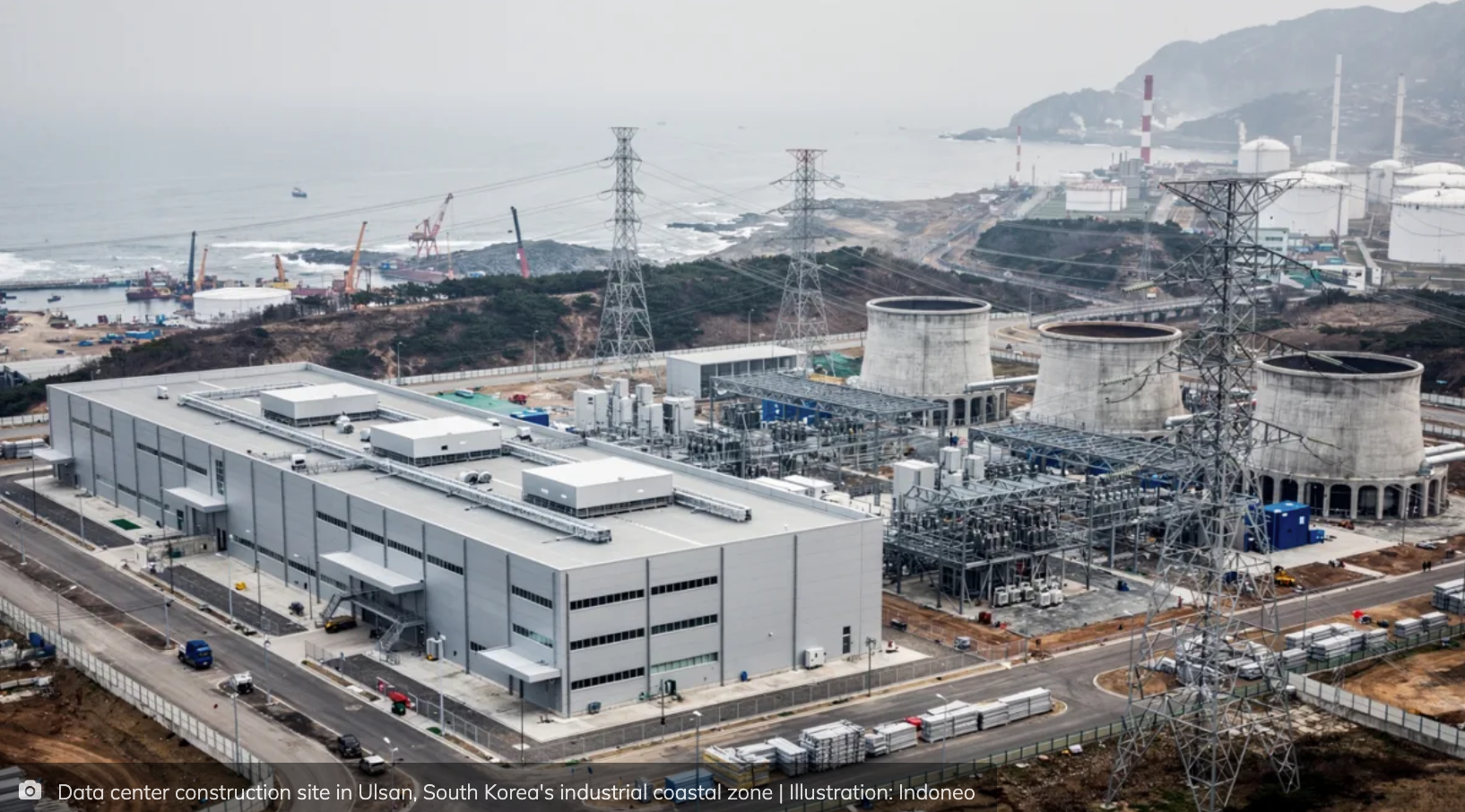
And they certainly couldn’t have imagined a world preparing to spend tens of trillions of dollars building machines descended from theirs.
But that’s how technological revolutions work.
At first, they look like curiosities.
Then they become the economy itself.
ENIAC began with one room.
Today’s AI campuses can consume the power of small cities.
Tomorrow, an entire energy and industrial ecosystem may exist primarily to feed intelligent machines.
That’s why I don’t believe the $31.6 trillion estimate is merely a story about artificial intelligence.
It’s a story about electricity and everything that goes into it to produce it.
And ultimately, the rebuilding of the physical foundation of the American economy.
The digital revolution has crossed into the physical world.
And once that happens, the investment universe becomes dramatically larger.
That’s the opportunity I’ve been trying to show you.
That’s the Industrial Twin. That’s the new industrial revolution.
That’s the MoneyQuake.
Get to the good, green grass first…
The Prophet of Profit,

Brian Hicks
 Check us out on YouTube!
Brian is a founding member and President of Angel Publishing. He writes about general investment strategies for Wealth Daily and Energy and Capital. Brian is the managing editor and investment director of R.I.C.H Report (Retired Independent Carefree Healthy), New World Assets and Extreme Opportunities. For more on Brian, take a look at his editor’s page.
The Best Free Investment You'll Ever Make
We never spam! View our Privacy Policy
After getting your report, you’ll begin receiving the Wealth Daily e-Letter, delivered to your inbox daily.
Angel Publishing Investor Club Discord - Chat Now
Brian Hicks Premium
Introductory

Advanced


